Inferal Relay

Keep every integration current.

Relay owns the operational work between a provider and a dependable stream: rate limits, credentials, retries, ordering, schema changes, and unreliable webhooks. Your products, teams, and agents get clean, versioned data they can trust.

SourceShopify Admin API
Webhook#024
Order webhook hint
API pull
Fetch current order
Relay engineListening
  1. 01ListenOrder webhook hint
  2. 02DecideFetch current order
  3. 03PublishOrder #1042 current
Stream browser

Product database

Find your Relay

How teams use Relay.

Choose the use case closest to yours. Each example shows what changes, what Relay handles, and what your product or team receives.

AI and agents

Give agents current state before they act.

An agent can call an API and still make the wrong decision because its context is stale, partial, or split across systems.

Relay delivers current, versioned context and can verify the relevant entity again before a consequential action.

What happens in practice3 parts
  1. 01What changes

    Campaign spend rises while Shopify inventory falls.

  2. 02Relay handles

    Relay refreshes both records, orders the changes, and verifies the latest versions.

  3. 03You get

    The agent receives current context and can guard the action before it runs.
What Relay owns

The work between ‘connect’ and ‘trust it.’

  1. 01

    Detect source changes

    Use each source's real change mechanism: webhooks, change data capture, logical replication, event records, object notifications, subscriptions, or adaptive polling. Reserve rate-limit capacity for on-demand checks.

    Data stays as fresh as each source allows, so decisions start from the latest available state.

  2. 02

    Keep credentials valid

    Refresh tokens proactively, rotate credentials without stopping every stream, detect missing scopes, and isolate failures to the affected connection.

    Credential management stays centralized, so product teams do not rebuild token, scope, and rotation logic for every integration.

  3. 03

    Contain provider failures

    Use bounded retries, exponential backoff, circuit breakers, and persistent state so a provider's bad hour does not become your incident.

    Upstream incidents stay localized while healthy streams continue to deliver.

  4. 04

    Preserve order and versions

    Preserve source time, stream order, entity identity, and version history so late or duplicated signals do not erase what happened.

    Every delivered fact keeps its provenance and reproducible history, making it traceable, auditable, and trustworthy.

  5. 05

    Inspect stream health

    Inspect stream health, freshness, lag, entity progress, and provider constraints instead of discovering failures through downstream behavior.

    Teams catch stale or unhealthy data before products and agents act on it.

  6. 06

    Publish RDF + LDES

    Relay can publish versioned entity state as RDF and Linked Data Event Streams (LDES). Stable identifiers, source time, relationships, and historical members remain intact across snapshots, deltas, and events.

    Those identifiers connect source records to shared ontologies. Operational Models use the same semantic entities to derive facts, implications, and governed actions.

    One semantic identity works across ingestion, history, reasoning, and governed action, reducing reconciliation work and making decisions explainable.

    See Operational Models

Inside a Relay stream

A stable structure for changing data.

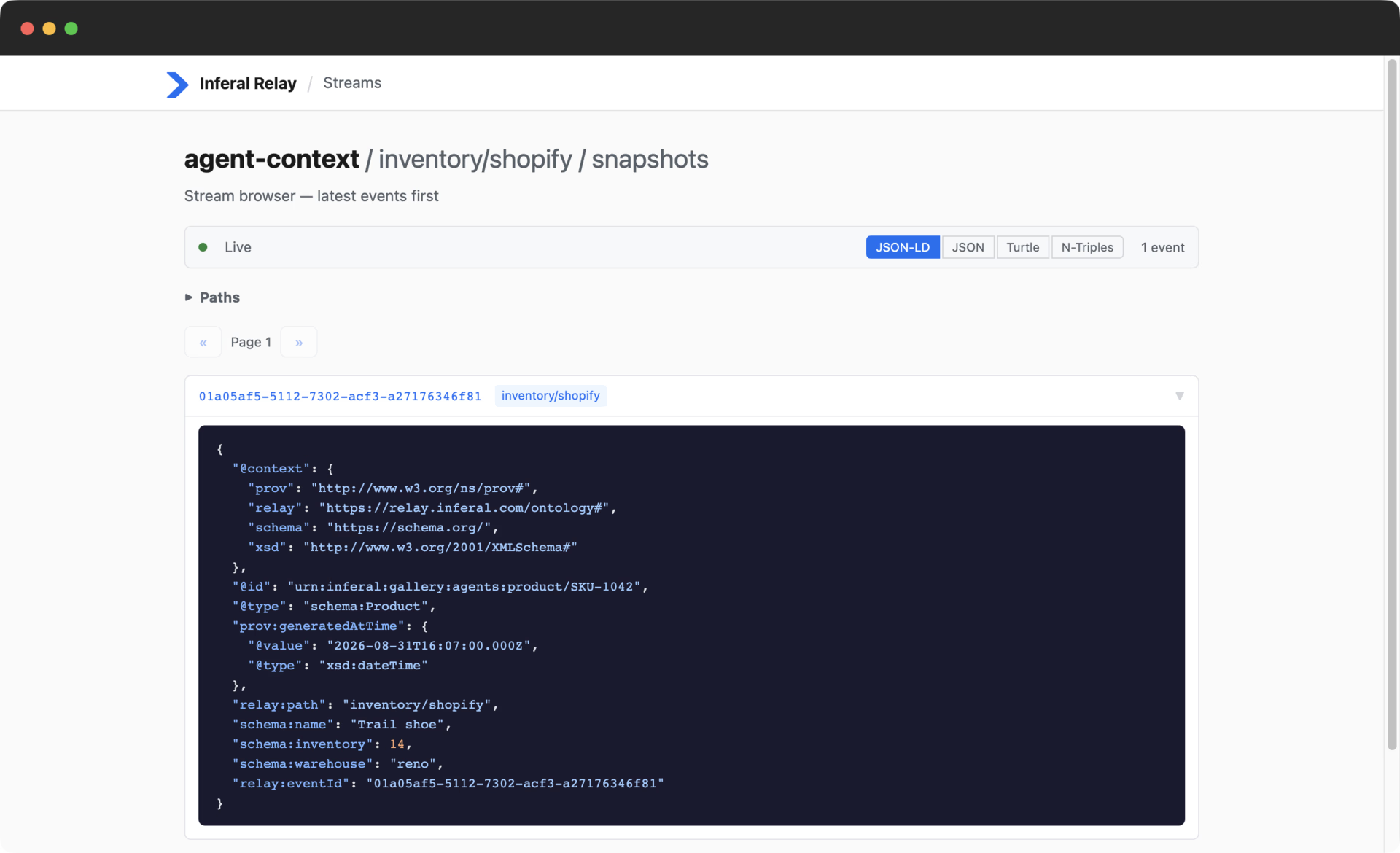
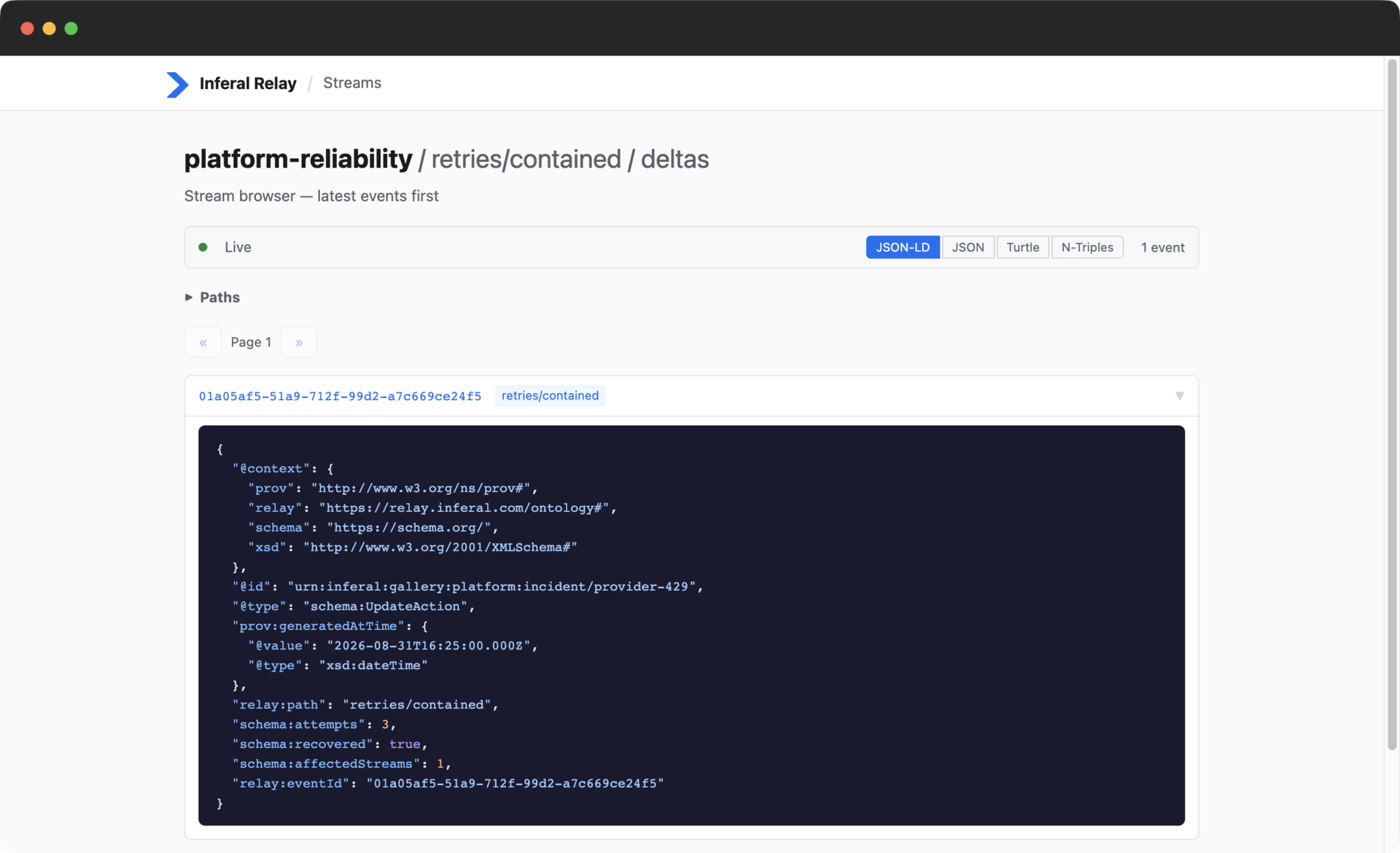
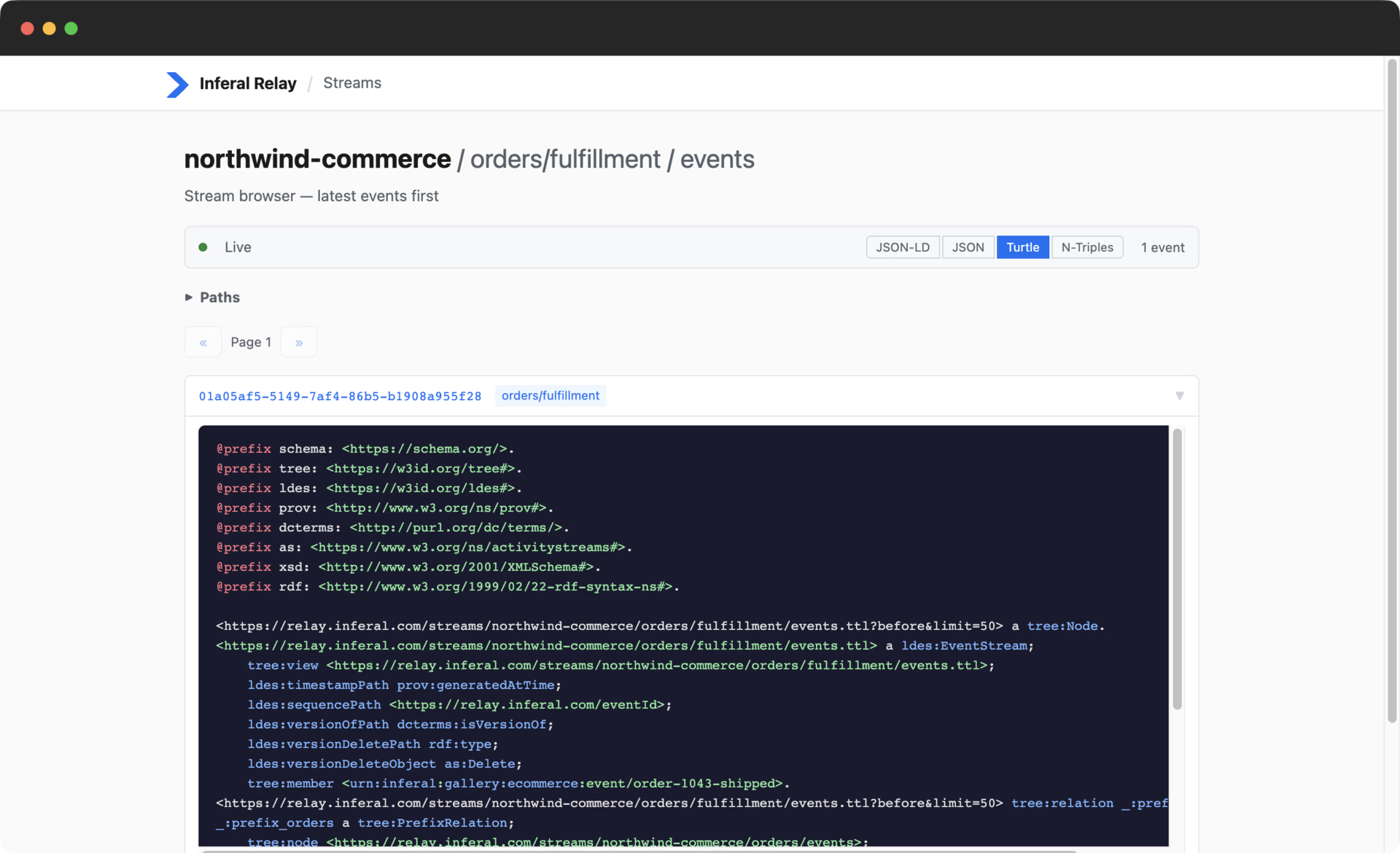
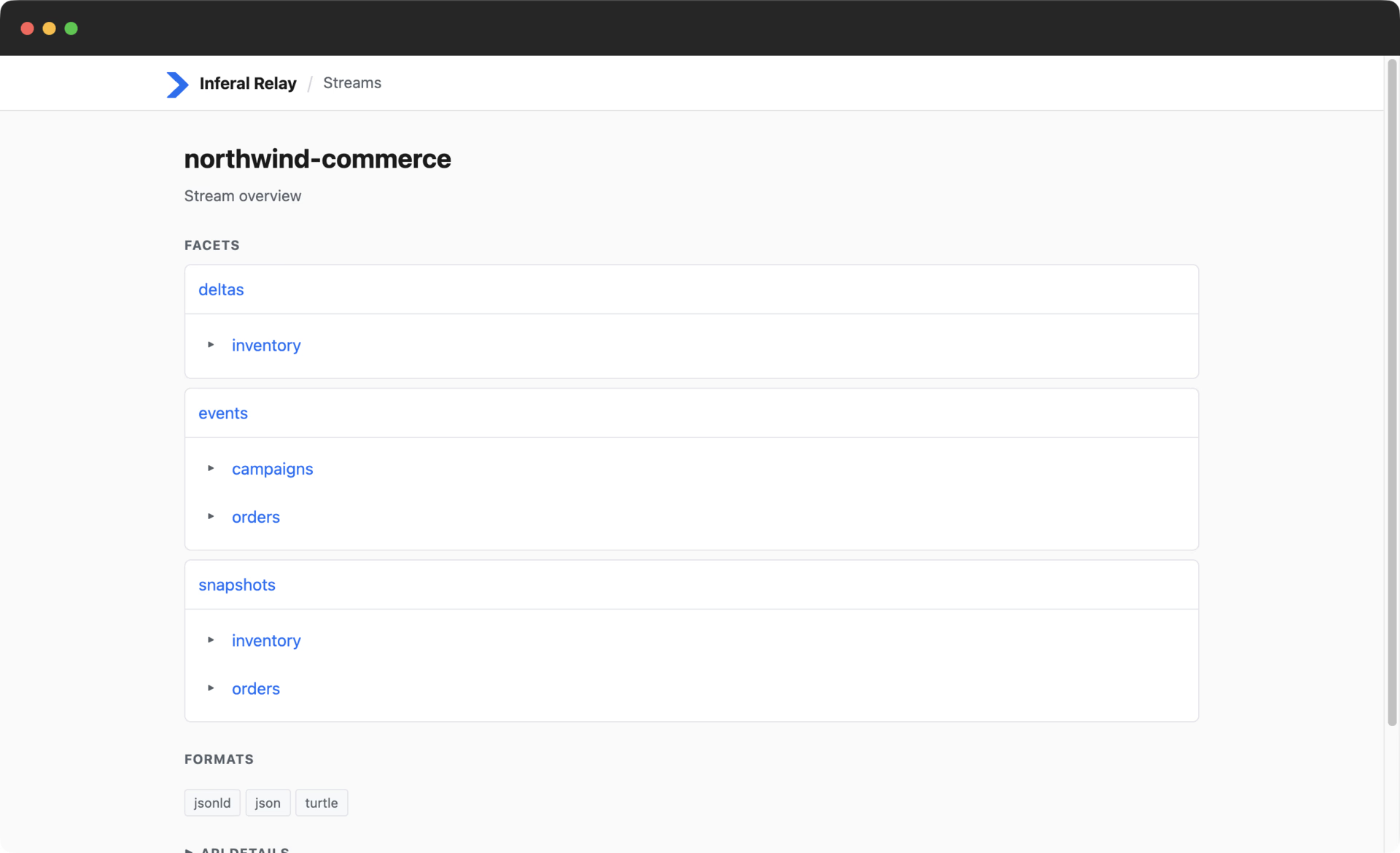
Relay organizes every source into named paths with three complementary views: current snapshots, versioned deltas, and discrete events. Consumers can read the same stream as JSON-LD or Turtle.

  1. Relay stream overview for Northwind Commerce with inventory, campaign, and order paths organized under snapshots, deltas, and events.

    Stream topologyOne stream, organized by path.

    Each operational concern has a stable address across snapshots, deltas, and events, even as provider coverage and volume grow.

  2. Expanded JSON-LD snapshot for a Shopify inventory product in the Relay stream browser.

    Current stateSnapshots hold the latest entity state.

    Every snapshot keeps entity identity, source time, version, and semantic fields together under its operational path.

  3. Expanded JSON-LD delta showing a recovered provider rate-limit incident in Relay.

    Change historyDeltas preserve what changed.

    A provider recovery becomes a versioned change, so consumers can distinguish reconciliation from an unexplained overwrite.

  4. Expanded Turtle representation of a fulfillment event with Relay, TREE, and LDES vocabulary highlighted.

    Semantic deliveryEvents retain identity and context.

    The same event-stream structure carries through RDF and LDES-compatible Turtle without losing its path or identity.

Deployment options

Choose how Relay runs.

Compare where Relay runs, who operates it, and which control boundary fits your requirements. Every option keeps the same Relay stream contract, so deployment does not reshape the product your consumers depend on.

Managed

Inferal operates the Relay services, provider lifecycle, stream infrastructure, and routine reliability work.

$12

per stream / month

Deployment
Inferal-hosted service, including connectors, storage, and reliability systems
Best for
Teams that want to start quickly without owning integration infrastructure

Dedicated

An isolated Relay deployment for organizations that need a distinct operational boundary and tailored service commitments.

Early access

Custom

based on scale and service commitments

Deployment
An isolated Relay environment operated by Inferal for your organization
Best for
Organizations with isolation, scale, regional, or service-level requirements

Self-hosted

Run Relay in your Kubernetes environment with customer-controlled storage and a deployment plan developed with our team.

Early access

Scoped

deployment engagement

Deployment
Your Kubernetes environment, operated by your platform team with an agreed support model
Best for
Teams with data sovereignty, air-gapped deployment, or customer-controlled infrastructure requirements

Customer

“In an era where source code became a commodity, being able to get exactly the data you want in real-time is the moat you need to develop powerful agents. Inferal Relay provides this moat for us.”

Manta/ AI-native growth infrastructure

Start with your real system

Bring us the integrations your product depends on.

Tell us which systems need to stay current, how many customer or provider accounts are involved, and where reliability work is absorbing time. We review the topology and reply by email with concrete next steps.

Integration briefEarly access
Add useful detail

Choose a prompt. Its bracketed example is selected so you can type over it.

We will frame the architecture, operating model, and commercial response around this choice.

We will review your brief and follow up.