What Rules Know That Code Forgets
Rules make business logic visible. Implication graphs make consequences traceable. That difference matters when every operational decision has a downstream path.


Most business logic starts as a sentence.
“If a supplier misses two shipments in a quarter, review their risk score.”
“If a port closes, reroute high-priority inventory.”
“If a customer’s usage spikes and their contract renewal is within 90 days, notify the account team.”
These are not complicated ideas. They are the small pieces of judgment that make a company function.
Then we put them in code, and they disappear.
They become conditionals inside services, SQL predicates inside dashboards, scheduled jobs inside orchestration systems, and manual checks inside someone’s spreadsheet. The rule still exists, but the business can no longer see it clearly.
That is the first value of a rule engine: it gives the business its own logic back.
A rule says what should be true and what follows from it. It is inspectable, testable, and changeable without digging through procedural code that happened to accumulate the last three years of exceptions.
But rules by themselves are only the beginning.
The real value starts when you stop asking “which rule fired?” and start asking “what does that imply?”
The Supply Chain Version
Imagine a manufacturer with a simple rule:
If a supplier misses a delivery window, mark the shipment as delayed.
Useful. But not especially interesting.
Now add another rule:
If a delayed shipment contains a constrained component, mark the production run at risk.
And another:
If a production run is at risk and the customer order is strategic, escalate to operations.
And another:
If operations escalates and an alternate supplier has available inventory, recommend a substitution.
No single rule is magic. Each one says one thing clearly. The value comes from the path: late shipment, constrained component, production risk, customer risk, recommended action.
That chain is the difference between a dashboard and an operating system.
A dashboard can tell you the shipment is late. A workflow can send an alert. A rule engine can react. An implication machine can explain what the lateness means.
Rules Are Local. Implications Are Global.
A rule is local by design.
It watches for a pattern. When the pattern appears, it produces a conclusion, a decision, or an action. The supplier-delay rule does not need to know about customer escalation. The production-risk rule does not need to know how port closures are detected.
But businesses do not experience events locally.
One missing part can affect production capacity, margin, delivery promises, customer health, contract penalties, inventory allocation, and sales forecasts. Those effects unfold across the system.
That is why implication matters.
An implication machine treats rules as edges in a graph:
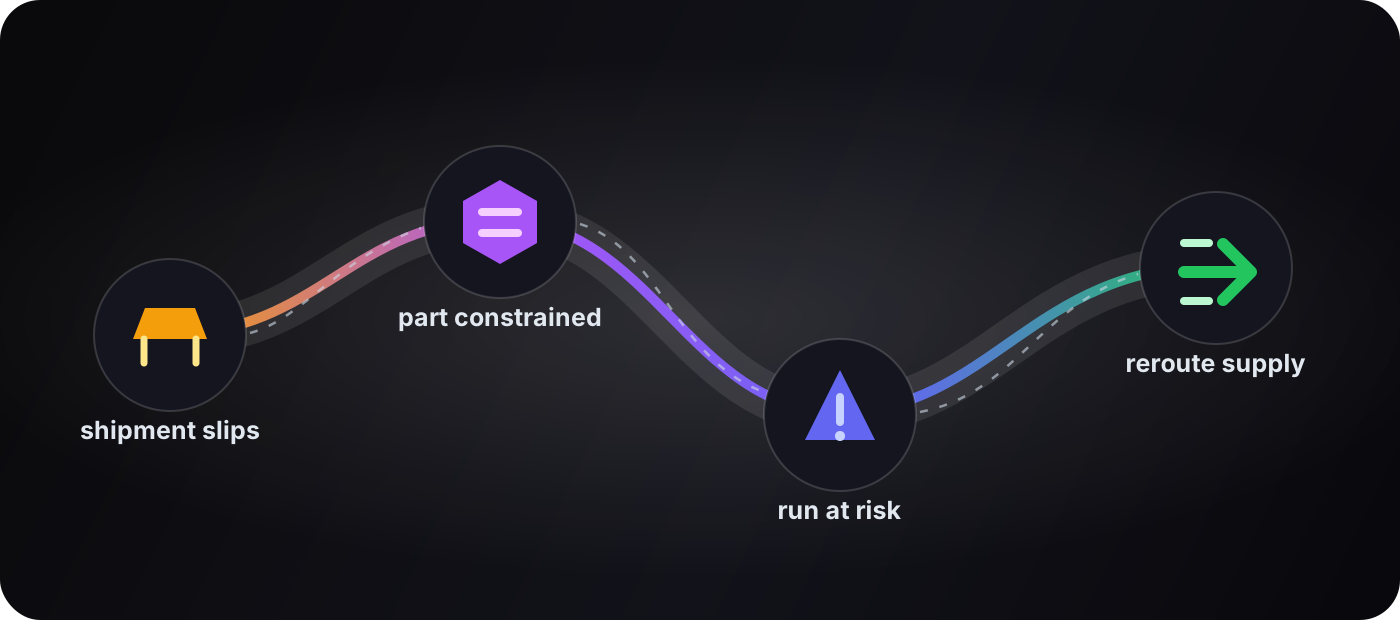
The unit of reasoning is no longer a single rule firing. It is a path through the implication graph, and that path is where the business value lives.
The What-If Question
Operators do not only need to know what is true now. They need to know what would become true if something changes.
What happens if this supplier slips by another 48 hours?
What happens if we allocate the remaining inventory to Customer A instead of Customer B?
What happens if the alternate supplier is approved but has a higher defect rate?
What happens if the port reopens tomorrow?
Most systems answer these questions badly because their logic is scattered. You can run a report, simulate one workflow, or ask an analyst to stitch together the answer.
But the implication graph is already the model of consequence.
If the business rules are explicit, and the relationships between facts are explicit, “what if?” stops being a meeting and becomes a traversal.
Start with a proposed fact:
Supplier X misses delivery by 48 hours.
Then ask the machine what follows. Not just the first alert. The chain.
Which production runs become at risk? Which orders are affected? Which customers cross escalation thresholds? Which substitutions become legal? Which substitutions introduce new risk? Which commitments no longer hold?
You do not need more notifications. You need systems that can trace consequence.
Why This Is Different From A Workflow
A workflow says:
do step one, then step two, then step three
That works when the world is stable and the path is known in advance.
Supply chains are not like that. Neither are fraud systems, compliance operations, sales processes, security response, or infrastructure automation.
The path emerges from facts.
A supplier delay matters only if the component is constrained. The component matters only if it feeds an active production run. The production run matters differently depending on the customer, contract, margin, inventory, and deadline.
Trying to encode that as one workflow produces a brittle machine. Every new condition adds a branch. Every exception adds an escape hatch. Eventually nobody knows whether the workflow represents the business or merely the last six emergencies.
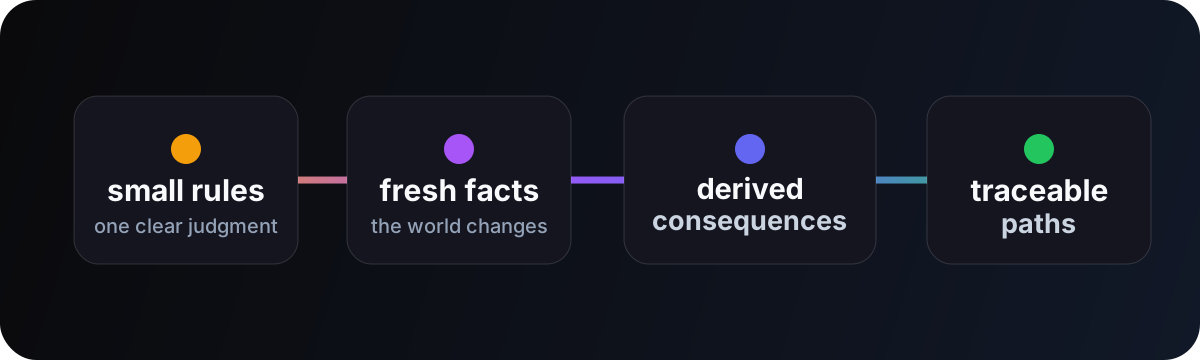
Rules separate the pieces. Implications reconnect them.
That is the useful shape:
Why Businesses Should Care
This is not an academic distinction. It changes how a company operates.
First, it improves explanation. When someone asks why an escalation happened, the answer is not “because the job ran.” The answer is the path: shipment delayed, component constrained, production run at risk, strategic order affected.
Second, it improves change. If the business changes the threshold for strategic customers, that is one rule. The implications update from there.
Third, it improves simulation. The same rules that react to real facts can evaluate hypothetical facts, so “what if?” runs against the actual logic of the business instead of a separate model that drifts away from reality.
Fourth, it improves coordination. Procurement can define supplier risk. Manufacturing can define production constraints. Sales can define customer priority. The implication graph connects them without forcing all logic into one service.
That is the larger promise: a business where operational knowledge is not trapped in code, dashboards, tickets, and meetings.
From Rules To Meaning
A rule engine tells you what matched.
An implication machine tells you what follows.
That sounds philosophical until you are responsible for a customer order, production line, fraud case, or compliance breach. Then the distinction becomes practical.
You do not just want to know that a rule fired. You want to know why it fired, what it caused, what else it depends on, and what would change if one premise changed.
That is the shape businesses need. Not more code paths. Not more dashboards. Not another workflow with a hundred branches.
A living graph of facts, rules, and implications. One that can react to what is happening now, explain how it got there, and explore what could happen next.
That is why rules still matter.
And it is why the implication graph matters even more.